Descripción
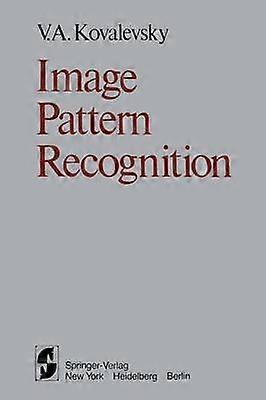
Image Pattern Recognition
I The Current State of the Recognition Problem. - 1. 1 Basic Concepts and Terminology. - 1. 2 Heuristic Paths. - 1. 3 Methods Based on Assumptions on the Family of Decision Functions. - 1. 4 Methods Based on Assumptions about the Properties of the Signals. - 1. 5 Applications and Results. - 1. 6 Conclusions. - II A Parametric Model of the Image-Generating Process. - 2. 1 Difficulties in Image Recognition. - 2. 2 A Parametric Model with Additive Noise. - 2. 3 The General Parametric Model. - 2. 4 Recognition and Learning Viewed as Problems of Optimal Decision with Respect to Parameter Values. - 2. 5 Recognition in the Absence of Nuisance Parameters. - 2. 6 Recognition with Nuisance Parameters. - 2. 7 Optimization of the Decision Rule over a Prescribed Class. - 2. 8 Learning and Self-Learning. - 2. 9 Problems with Nonstatistical Criteria. - 2. 10 Conclusions. - III The Parametric Learning Problem. - 3. 1 Learning with a Sample of Mutually Dependent Signals in the Presence of a Nuisance Parameter. - 3. 2 Learning with Independent Nuisance Parameters. - 3. 3 Learning as the Minimization of the Conditional Risk. - 3. 4 Conclusions. - IV On the Criteria for the Information Content of a System of Features. - 4. 1 On the Choice of Primary and Secondary Features. - 4. 2 Sufficient Statistics. - 4. 3 A Measure of Insufficiency. - 4. 4 Generalization of the Measure of Insufficiency to the Case of Probabilistic Transformations. - 4. 5 Entropy as a Measure of Insufficiency. - 4. 6 On the Kullback Divergence. - 4. 7 Entropy and Error Probability. - 4. 8 The Information Content of the Optimal Decision. - 4. 9 Theorems on the Relation between the Conditional Entropy and the Error Probability. - 4. 10 Conclusions. - V The Method of Admissible Transformations. - 5. 1 Sets that are Closed under Transformations. - 5. 2 Admissible Transformations and the Formalization of the Notion of Similarity. - 5. 3 Peculiarities of the Method of Admissible Transformations. - 5. 4 Recognition by the Correlation Method. - 5. 5 Experimental Results. - 5. 6 Potential Applications of the Correlation Method. - 5. 7 Conclusions. - VI Optimization of the Parameters of a Piecewise Linear Decision Rule. - 6. 1 The Adequacy of a Piecewise Linear Rule and Formulation of the Optimization Problem. - 6. 2 The Linear Decision Rule as a Special Case. - 6. 3 The Optimization Problem and Its Solution. - 6. 4 Solution of the Optimization Problem for a Piecewise Linear Rule. - 6. 5 An Application to the Recognition of Alphanumeric Characters by a Character Reader. - 6. 6 Conclusions. - VII The Reference-Sequence Method. - 7. 1 Formal Statement of the Structural-Description Problem. - 7. 2 Formal Syntactical Rules for Constructing Composite Images. - 7. 3 Solution of the Problem of Maximum Similarity. - 7. 4 Images on a Two-Dimensional Retina. - 7. 5 Recognition of Lines with Restricted Change of Direction. - 7. 6 Recognition of Handwritten Characters. - 7. 7 Conclusions. - VIII The Recognition of Sequences of Images. - 8. 1 Mathematical Model of a Typewritten Line and Formulation of the Problem. - 8. 2 Solution of the Problem. - 8. 3 Solution of the Problem with a Correlation Criterion for the Similarity. - 8. 4 Recognition of Sequences of Unbounded Length. - 8. 5 Examples and Experiments. - 8. 6 Scope of the Algorithm and Possible Generalizations. - 8. 7 Conclusions. - IX The ?ARS Character Reader. - 9. 1 The Operational Algorithm for a Character Reader. - 9. 2 The Technical Implementation of the Line Recognition Algorithm. - 9. 3 The Choice of the Hardware for Finding and Scanning the Lines. - 9. 4 Block Diagram of the ?ARS Reader. - 9. 5 Tests of the Reader. - 9. 6 Conclusions. On the Use of CharacterReaders. - References. - List of Basic Notations. Language: English
-
Nº de Fruugo :
337894797-741554102
-
ISBN:
9781461260356
Entrega y devolución
Enviado en un plazo de 6 días
Envío desde Reino Unido.
Hacemos todo lo posible para asegurarnos de que se le entreguen los productos que pida en su totalidad y de acuerdo con sus especificaciones. Sin embargo, si recibe un pedido incompleto o artículos diferentes a los que pidió, o hay alguna otra razón por la que no está satisfecho con el pedido, puede devolver el mismo o cualquier producto incluido en él y obtener un reembolso completo por los artículos. Vea la política de devolución completa